· Guild & Craft
The Runway, Reimagined: How Guild & Craft Is Opening Up Dubai's Fashion Show Scene
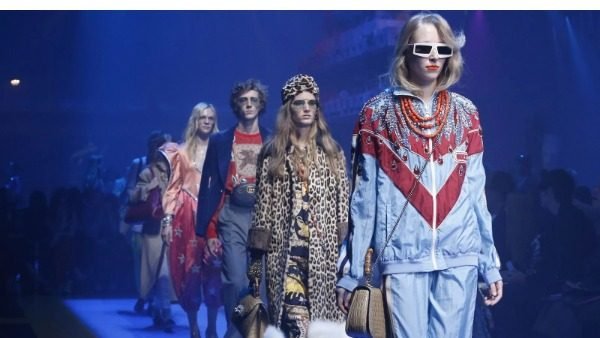
Dubai has become one of the most watched fashion cities outside the traditional capitals. But for most labels, the runway is still out of reach. Guild & Craft wants to change that with one simple idea: share the stage.
A collection only earns attention when people can see it move. Yet a full runway show, with its venue, build, lighting, models, backstage crew and press list, is a cost that only the biggest houses can absorb on their own. The result is a city full of talented designers, jewellers and accessory makers who sell through Instagram and pop-ups but never get their moment under the lights.
Dubai's runway moment
Dubai now sits on the global fashion calendar. Dubai Fashion Week, co-founded by Dubai Design District (d3) and the Arab Fashion Council, ran its Autumn/Winter 2026/27 edition from 1 to 6 February 2026 and billed itself as the first fashion week in the world to show that season. Italian house Alberta Ferretti opened the week with its first full-scale show in the Middle East.
Around that official calendar sits a busy city of private presentations, mall activations, hotel ballroom shows and brand launches. Homegrown labels in modest wear, abaya and kaftan design, couture, jewellery and fragrance are growing fast, and the audience for them is international, affluent and online.
The gap is in the middle. The official week is selective, and a standalone show elsewhere is expensive. Between the two sit countless brands with collections worth seeing and no realistic way to show them.
Why most brands never get a runway
A solo show is a stack of fixed costs that do not shrink with the size of the brand. Every show needs the same core pieces, whether it presents ten looks or forty:
- A venue, a runway build, seating and a backdrop
- Lighting, sound, music direction and a technical crew
- Professional models, fittings and rehearsals
- Hair, make-up, dressers and backstage supervision
- Guest lists, press and buyer outreach, hosts and ushers
- Photography and video, so the night keeps working afterwards
A large luxury house can carry that bill. A first collection, a graduate line or a young jewellery label usually cannot. So they compromise: a borrowed space, friends as models, a phone camera. The result undersells the work and rarely reaches buyers or press.
There is a second problem: audience. A new brand with a modest following struggles to fill a room on its own, and an empty front row is worse than no show at all.
The Guild & Craft idea: one runway, several brands
Guild & Craft's answer is the curated multi-brand show. Instead of each label paying for its own night, several complementary brands share one production, one audience and one press list. A clothing label, a jewellery house and a footwear brand walk the same runway, and each gets a far bigger night than it could fund alone.
The model rests on four ideas:
- One production, shared. Venue, runway build, lighting, sound, models, backstage crew and photography are produced once and split between the brands. Each brand pays a fraction of a solo show without losing the scale on the night.
- Curated, not crowded. Brands are chosen to complement rather than compete: apparel with jewellery, footwear with accessories. Each gets its own clearly defined segment on the runway.
- Styled as one story. Stylists build each look across the participating brands, so a dress walks with the right earrings and the right heels. Every brand looks better because of the others.
- A bigger room. Each brand brings its own clients, buyers and followers. Combined, the room is fuller, the press list is longer and the content reaches several audiences at once.
This turns the runway from a cost centre into what Guild & Craft calls a sales floor: a place where a collection moves in front of the people who will buy it, write about it or share it.
Who it's for
Guild & Craft's rule is simple: if it is worn, carried or worth photographing up close, it belongs on a runway. The format scales from a label's very first public showing to an established house.
Emerging designers and young brands. First collections and graduate lines get a professional stage rather than a compromise. Guild & Craft runs entry-level packages built for them: the same models, crew and production standard, at a size and price a first or second collection can carry. Options include shared multi-brand shows, smaller showroom and press previews instead of a ballroom build, and reusable runway and set elements from the company's own stock. Brands can take the runway and models first and add extras later, and they get honest guidance on what a first collection actually needs.
Smaller and independent labels. Ready-to-wear, occasion wear, modest fashion, abaya and kaftan houses,